
Built for machining
APQP/PPAP, PFMEA, control plans, drawing dimensions and tool life ship by default. Discrete-manufacturing reality at the core — not an afterthought module.
Torqa brings OEE, operation-level shop-floor reporting, APQP/PPAP, lot traceability, MRP and native Brazilian compliance — NF-e, SPED and the IBS/CBS tax reform — together in a modern platform built for shops that actually machine parts.
Built for industry that measures what it makes
OEE no one trusts. PPAP living in loose spreadsheets. Tax in one system, production in another, and nobody speaking the same language. Every fragile integration is a place where the number breaks. Torqa closes the loop: what the operator logs at the machine is the same number that reaches the boardroom and the SPED file.
APQP/PPAP, PFMEA, control plans, drawing dimensions and tool life ship by default. Discrete-manufacturing reality at the core — not an afterthought module.
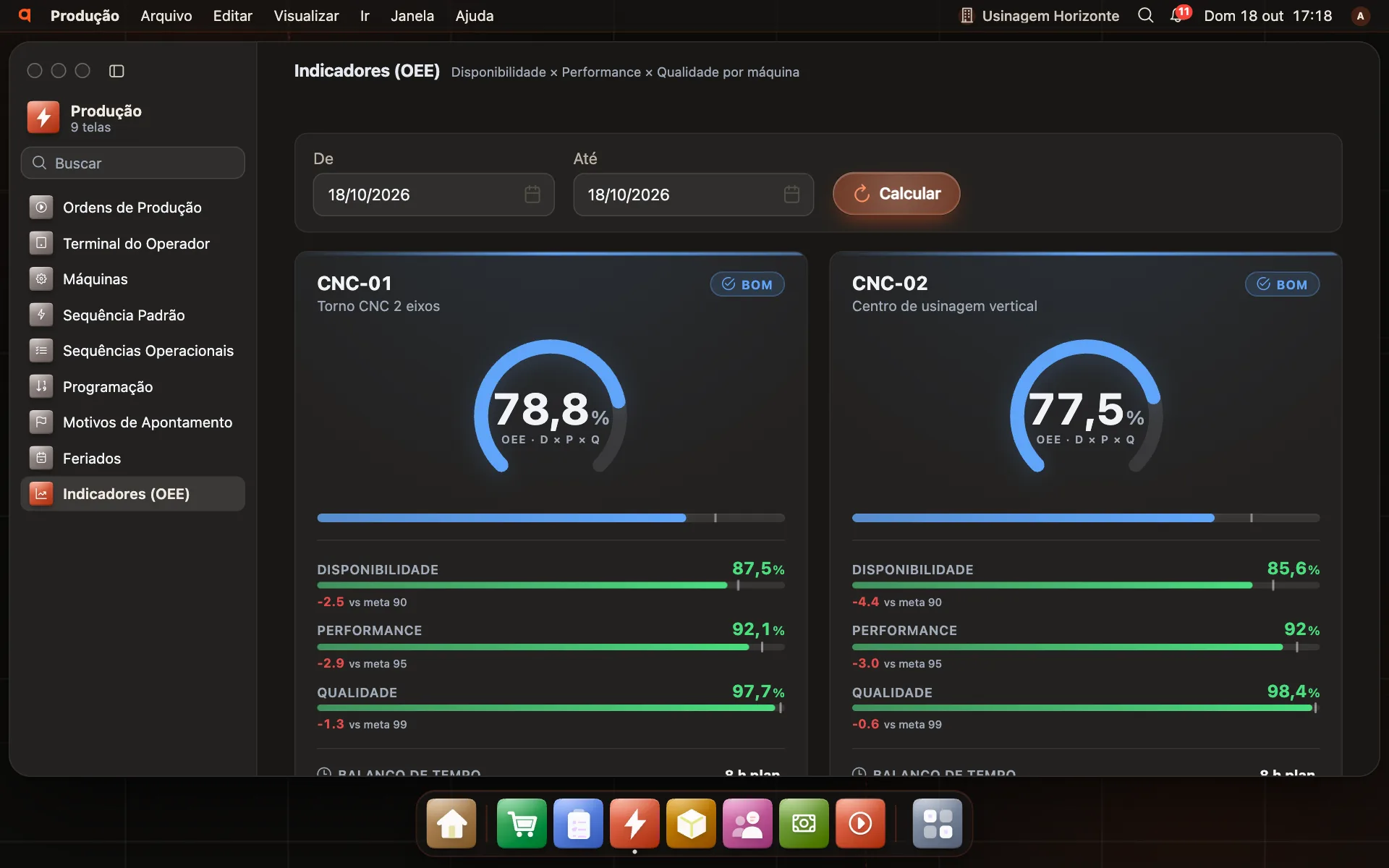
Operation-level reporting with run time, setup, downtime and reason codes. OEE per machine and per work order (Availability × Performance × Quality). You measure what happens, not what was planned.
NF-e model 55, national NFS-e, SPED EFD ICMS/IPI and the 2026 IBS/CBS tax reform already in the XML. Compliance is the foundation, not an add-on.
Built on .NET with DDD and Clean Architecture, with an Angular 21 Signals front-end. Multi-site, end-to-end audit trail and per-company branding. Premium software, not repainted legacy.
Each station on this line is a Torqa module at work — from planning to the tax invoice. The part enters as raw stock and leaves machined, measured and invoiced.
Demand explodes from the BOM into orders with lead time and netting.
The work order runs on the machine with operation reporting and live OEE.
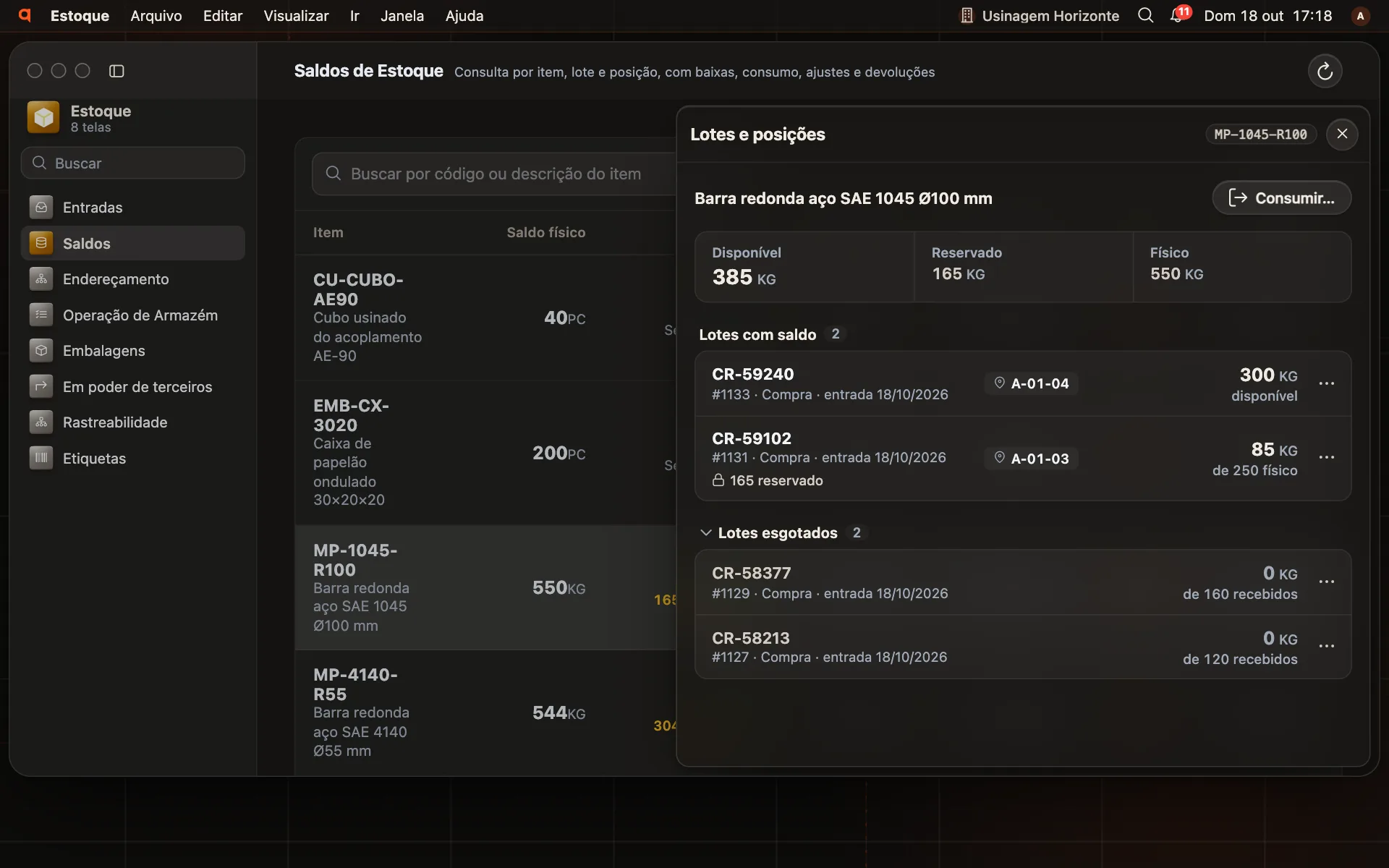
The lot is binned, traced and consumed in FIFO/AVCO.
The drawing dimension is measured and non-conformance is handled.
The picking list closes, the NF-e is issued and SPED is generated.
From quote to NF-e to SPED, with no fragile integrations between different vendors.
Operation-level reporting and real OEE, machine by machine.
From item master to PPAP, with design quality built in.
Inspection, NCR and supplier scoring that close the loop.
3-way NF-e matching and end-to-end lot traceability.
A requirements engine that becomes work and purchase orders.
Live margin on every quote, commissions and shipping in one flow.
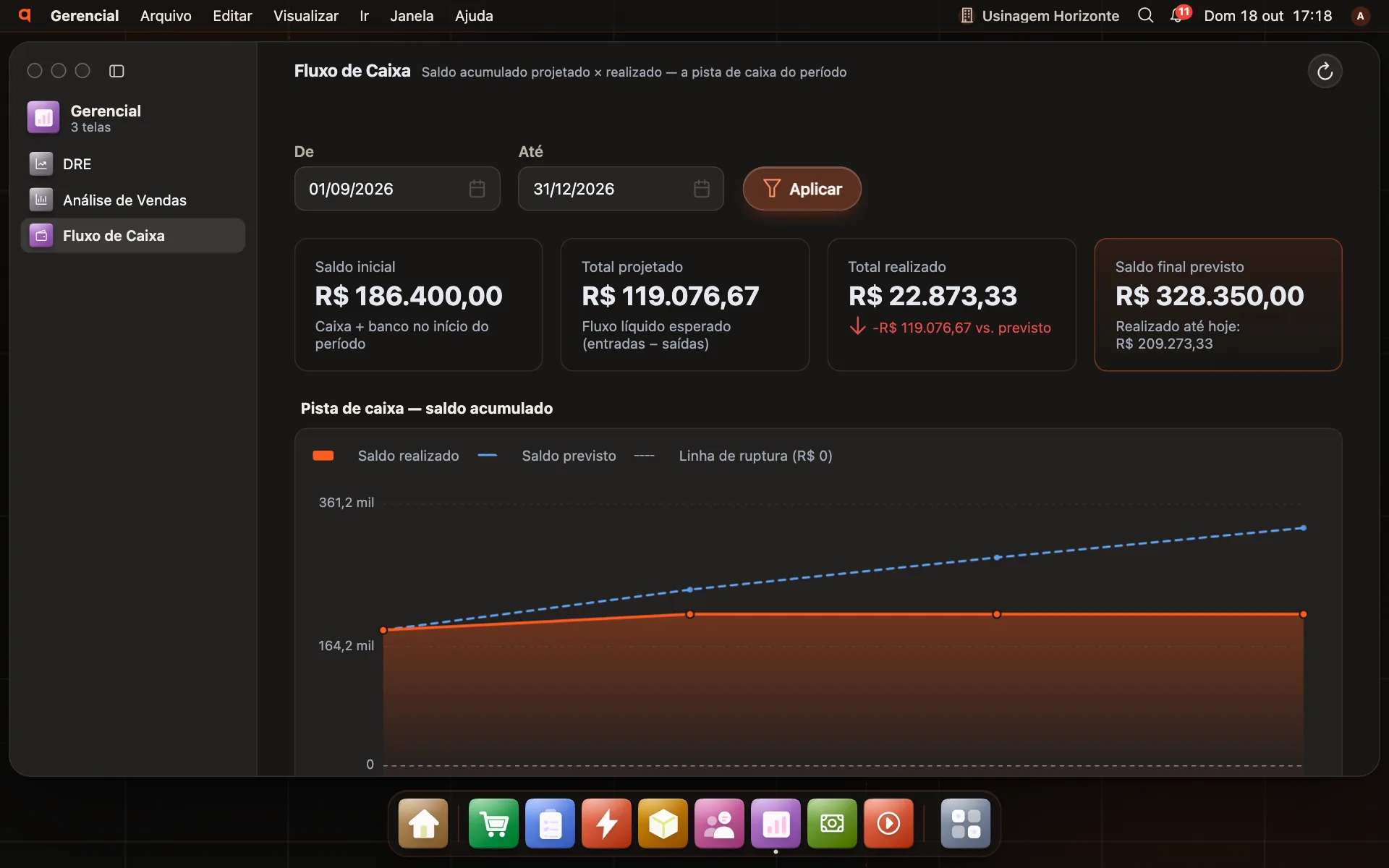
Rolling cash flow, automated dunning and bank slips — no spreadsheets.
Native NF-e, NFS-e and SPED, ready for 2026 IBS/CBS.
Multi-site, audit trail and your own brand, by default.
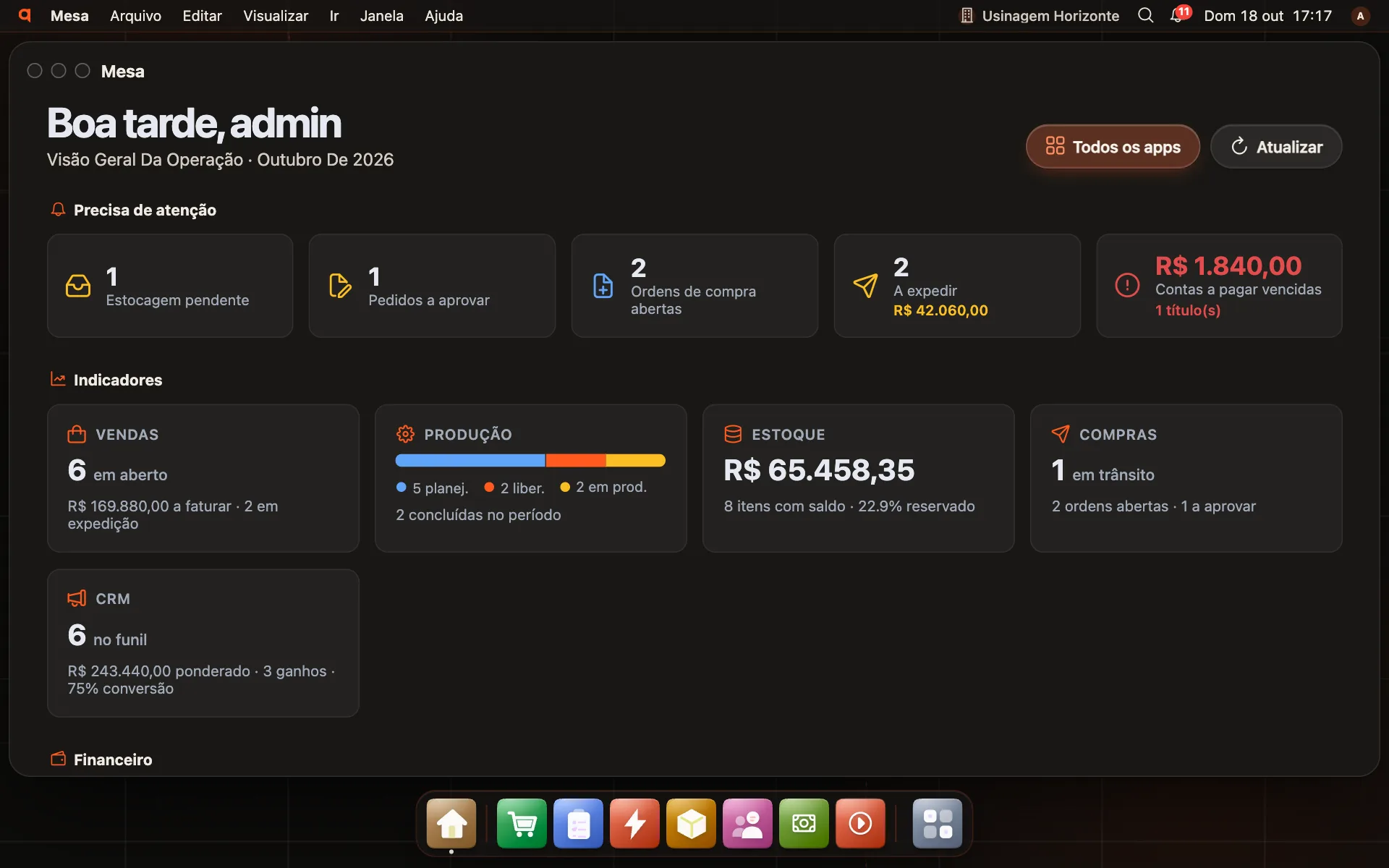
Torqa in operation — from the cockpit to shop-floor reporting, from the work order to the NF-e.
Clean Architecture in .NET with DDD on the back-end and Angular 21 Signals on the front. No legacy debt.
Entities and business rules with zero framework dependency. The factory heart, in code.
Services that orchestrate the domain. Result pattern, no exceptions for expected flow.
Versioned contracts, an ApiResponse envelope, JWT auth and a cross-cutting audit trail.
A zoneless SPA with Signals, multi-site and per-company branding.
APQP/PPAP, PFMEA, control plans and tool life out of the box — generic ERPs lack them and niche ones charge extra.
Real OEE (Availability × Performance × Quality) per machine and per work order, from operation-level reporting — not a spreadsheet KPI.
Native Brazilian compliance, already ready for the 2026 IBS/CBS reform, with SPED EFD ICMS/IPI generated inside the system.
End-to-end lot traceability with FIFO/AVCO, bin addressing and ownership control (own/third-party/returnable).
Modern architecture (.NET DDD/Clean + Angular 21 Signals): multi-site and full audit trail, with no legacy debt.
One system from quote to NF-e to SPED — no fragile integrations stitching planning, quality and tax from different vendors.
Pricing on request, value-based — you turn modules on as the factory needs them.
For the company that wants to sell, buy and run inventory and finance in one place — with native Brazilian compliance.
For the plant that needs engineering, production and planning — with real OEE and cost.
For the supplier that needs the automotive quality system, maintenance and multi-plant operation.
Every plan includes item registration and native Brazilian compliance (NF-e, NFS-e and SPED), with the foundation for the IBS/CBS tax reform.
Yes. The fiscal engine already emits IBS/CBS in the NF-e XML (with cClassTrib and the gIBSCBS group) with configurable rates for 2026, alongside today's ICMS/IPI/PIS/COFINS. As transition rules evolve, the calculation follows — and we always recommend validating rates with your accountant.
They're native. Torqa issues NF-e model 55 and national NFS-e (DPS) and generates SPED EFD ICMS/IPI with blocks 0, 1, C, E, H and K inside the system itself. No separate fiscal middleware and no re-exporting data between vendors.
Because it was built for machining and discrete manufacturing. APQP/PPAP, PFMEA, control plans, tool life and per-machine OEE ship by default. Generic ERPs treat the factory as a detail; here the shop floor is the center, integrated end to end with Brazilian compliance.
We start with the structural data — items, BOM, routings, machines and tax parameters — and turn modules on in waves, from receiving and production to finance and tax. The multi-site model lets you bring one plant up at a time. The goal is to get shop-floor reporting and NF-e running early, producing real data from the first weeks.
Torqa has an end-to-end audit trail — every relevant change is recorded — and per-site isolation. The .NET architecture with JWT authentication follows security best practices, and your data is yours, exportable at any time.
Real OEE. It is computed from operation-level reporting — run time, setup, downtime and reason codes logged at the machine — as Availability × Performance × Quality, per machine and per work order, using the real calendar and shifts. Not a number estimated in a spreadsheet after the fact.